
This is the time of year when the party rental season goes more-or-less dormant before ramping back up again in the spring. As rentals slow down, your focus should shift from deliveries and setups to off-season storage. It’s important to realize that the equipment you store away today is the same equipment you will be relying on when the rental calendar starts to fill up again next season. How well this equipment is stored will affect how well it performs, and how long it lasts, when the rental season returns. For this reason, we compiled a complete overview of how to store event rentals covering the most in-demand rental equipment like bounce houses, tents, and more.
TL;DR Summary
- Clean all rental equipment thoroughly before off-season storage
- Store items only when fully dry to prevent mold, mildew, rust, and corrosion
- Store off-the-floor in a clean, climate-controlled area whenever possible
- Keep accessories with their equipment and separate repairs from ready-to-rent items
- Organize inventory with spring in mind so high-demand items are easy to access
- Test all equipment before rental season starts to catch issues early
Why Proper Off-season Storage Matters
Proper storage is one of the most important things you can do this year to set yourself up for success next year. When your inventory is properly stored it means you’ll be able to quickly restart operations when party rental season returns in the spring. You’ll be able to avoid scrambling to find missing parts and rushing to repair equipment before a big event.
Investing time in smart storage now will pay off in fewer repairs, longer equipment life, smoother operations, and a more professional presentation when your busy season returns.
General Off-Season Storage Best Practices
No matter what type of event rental equipment you own—whether it’s inflatables, tents, or mechanical rides—there is a baseline of good storage practices that should be met. The party rentals industry is becoming a more competitive space, so paying attention to the small details is how you lay the foundation for the long-term success of your business.
Before getting into equipment-specific storage, these are some universal best practices that apply to nearly all party rental equipment:
Properly Clean Equipment Before Storing It
Properly cleaning your equipment before storing it should be the first step for off-season storage. If your equipment is being used, then it’s a given that it’s getting dirty. Inflatables are especially vulnerable because there are plenty of corners, folds, and seams where dirt can hide and accumulate. Being able to thoroughly clean your equipment becomes a challenge during the busy season since if your schedule is packed. This is why taking the time to deep clean your equipment before off-season storage is so important. This ensures that your inventory will be fresh and customer-ready when rentals start again in the spring.
Store Items Only When Fully Dry
The purpose of off-season storage is to keep your equipment rental-ready when it’s not being used, and one of your biggest concerns should be moisture. Before anything gets put on a shelf for the off-season, make sure it’s completely dry.
When starting a party rental business, many operators don’t fully consider the impact of storing equipment wet or dirty. For equipment that gets folded and packed away, like inflatables and tents, any amount of water left behind can lead to mold or mildew that will leave the material smelling musty or looking stained by the time you pull it out in the spring.
For “nuts and bolts” equipment like blowers, concession machines, and mechanical rides, moisture left behind can cause rust and corrosion which will degrade the parts that these items need to function.
Your inventory is an investment. If it comes out of storage dirty, moldy, or rusted, it won’t be rental-ready when demand returns, and that downtime can quickly turn into a real financial setback.
Store Equipment in a Clean Climate-Controlled Space, Off the Floor
It’s important to not just dry your equipment prior to packing it away, but store it in a space that is clean, cool, and free of moisture. Exposure to direct sunlight will fade the appearance of your inflatables and can also speed up the material’s degradation. You also need to ensure that the storage space does not have roof leaks or cracks in its structure where water can get in. Ideally, you will also keep the storage temperature moderate as heat exposure is another factor that can accelerate the degradation of materials.
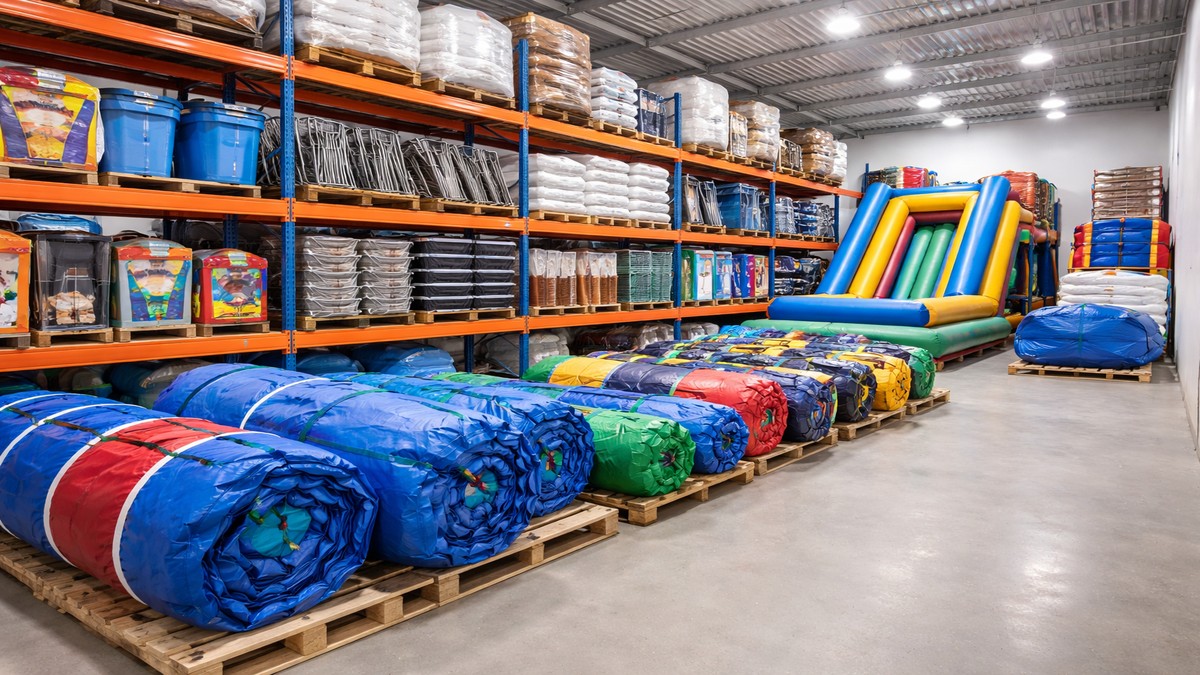
You should use shelving or raised platforms to store your items as this will serve as another precaution against accumulating moisture. It’s also important to keep your storage space pest-free — especially from rodents, as they will chew through vinyl material and power cords and cause costly damage.
Check On Your Items Periodically Through the Off-season
Even when you are following good storage practices, that doesn’t mean that you shouldn’t check on your equipment while it’s stored. Problems like water exposure and and pests can quietly create problems over time. So an additional good practice is to check on your stored equipment every 3-4 weeks to catch any issues early, so you can address them and avoid any setbacks when rental season ramps back up.
ERS software provides detailed inventory tracking and management to make off-season storage as simple as possible: Learn More about ERS
Cleaning and Storage Guidelines by Equipment Type
The general cleaning and storage guidelines above are a solid foundation, but some items in your inventory will require more specific care. Below are equipment-specific cleaning and storage considerations for different types of equipment commonly found in a party rental inventory.
Cleaning and Storing Inflatables, Tents, and Accessories
Use the steps below to clean, dry, and store inflatables, tents, and their accessories so they’re ready when the season returns. Because inflatables and tents are probably your most-rented items, they see heavy wear throughout the season. Extra care now helps prevent avoidable repairs later.
Cleaning the Equipment
Properly cleaning your inflatable items and tents starts with knowing what material they’re made of.
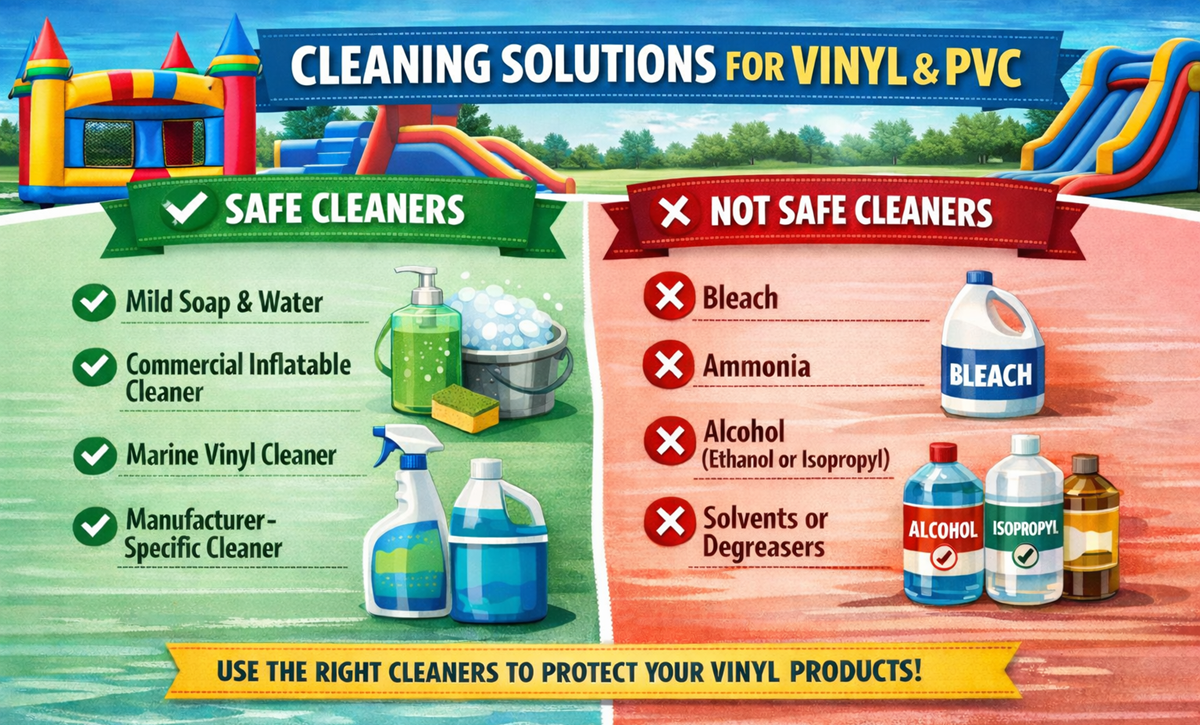
Most inflatables are made of polyvinyl chloride (PVC) or vinyl. If yours are as well, you should use a cleaning solution that is vinyl or PVC-safe, or you risk of damaging your equipment over time.
Examples of vinyl and PVC-safe cleaning solutions include:
- Mild soap and water
- Commercial inflatable cleaner (many manufacturers sell cleaners made specifically for their inflatables)
- Cleaning solutions labeled for marine vinyl
You should not be using cleaning solutions that contain:
- Bleach (unless it’s a very dilute solution)
- Ammonia
- Alcohol (such as ethanol or isopropyl alcohol)
- Solvents or degreasers
Tents share some of the same storage concerns as inflatables, but they also come with two key differences: they’re typically fabric (or vinyl), and they contain a lot of metal components. Because of that, tents are also more prone to staining and mildew issues if they aren’t cleaned and dried thoroughly before storage.
You also need to pay attention to what you are using to scrub the inflatable and tent cover. Abrasive pads and brushes can wear down any protective coating, which will eventually lead to tears and punctures over time. Instead, use microfiber cloths, non-abrasive sponges, and soft-bristle brushes to clean your inflatables and tent covers.
Drying Before Storage
Inflatable units and tent covers need to be completely dry before rolling and storing them. A good practice is to fully inflate any inflatables and set up tents, and allow them to air dry outdoors to remove any moisture that is trapped in creases, corners, and folds.
Storing Accessories and Hardware
Blowers are an overlooked but extremely important piece of equipment for your rental business because they are required to make your inflatable inventory “usable.” When storing your blowers for the winter, first wipe them down and remove any grass or debris from the intakes and outlets. Inspect the cord for any damage and, if present, label the blower for repair and store it separately from the “ready to rent” equipment.
Tent frame pieces can be treated the same as the blowers: wipe them clean and thoroughly dry them. Although blowers and tent frames are relatively low maintenance and do not require lubrication, it is still crucial to make sure moisture is not present when they are stored, as even steel and aluminum parts can rust if left wet over a long period of time.
Folding, Bagging, and Shelving
After washing and drying your inflatables and tents, the last step is to make sure that they’re folded correctly. The inflatable must first be completely deflated. Then it should be folded and rolled, being mindful to push all air out during the process. If your unit has deflation zippers, make sure to fold it so that these don’t put excessive stress on any part of the vinyl.
With tents, the key is to not fold the tent cover too tight, as doing so will create permanent creases that can make it harder to set up next season.
Once folded, bag inflatables and tent covers as an extra layer of protection, then place it on shelving.
Cleaning and Storing Mechanical Rides
Use the steps below to clean, dry, and store mechanical rides so they’re protected during the off-season and ready when demand returns. Proper care now helps prevent corrosion, mechanical issues, and avoidable downtime when the season picks back up.
Cleaning the Equipment
Because mechanical rides are made up of moving parts and electrical systems they require a different cleaning and storing process than inflatables and tents. This also means that they’re more susceptible to malfunction if they aren’t taken care of properly.
Like inflatables, mechanical rides get dirty too—just in a different way. Instead of mud and debris being tracked in, rides tend to build up grime from constant surface contact over long periods of time. Seats, handles, belts, restraints, and other high-touch areas should be cleaned thoroughly so the ride stays presentable and customer-ready.
When cleaning rides, you typically have more flexibility in the types of cleaners you can use, but some components still require you to take extra care. For example, vinyl seats and padded surfaces should be cleaned with vinyl-safe solutions, just like inflatable and tent materials, to avoid drying out the surface or causing discoloration over time.
Drying Before Storage
Just like with inflatables and tents, removing any moisture prior to storage is critical for maintaining your mechanical ride inventory. But your primary concern is preventing rust, as opposed to mold and mildew. These are the key things to keep in mind when drying your rides for winter storage:
- Dry all surfaces after cleaning
- Use a blower or fan to push lingering water out of any joints or crevices
- Let everything air-dry
- Apply a corrosion inhibitor to exposed metal
Following these tips will keep your rides moisture free for storage and rental-ready when party rentals start back up in the spring.
Securing and Storing
Now that your ride equipment is clean and fully dry, the final step is securing and storing it. If the ride has any parts that can swing, rotate, or slide, lock or strap them into place so they can’t shift and cause accidental damage while in storage. Once everything is locked in, use a breathable protective cover to keep dust and debris off the ride (only after it’s completely dry). Store rides indoors whenever possible, since mechanical equipment is especially sensitive to moisture, temperature swings, and long-term exposure to the elements.
How to Properly Clean and Store Food Concession Machines
Renting out food concession equipment comes with higher cleanliness expectations than inflatables or rides. Any residue, odor, or buildup can quickly lead to complaints, bad reviews, or lost bookings. Follow these guidelines to clean, dry, and store your concession inventory so it’s event-ready when spring comes.
Why Concession Cleanliness is Non-negotiable
If your party rental business offers concession add-ons like popcorn, cotton candy, and sno-cones, investing the required time to make sure that your concession machines are clean and customer ready is essential.
Concession equipment is held to a higher standard than inflatables or rides. Customers have very little tolerance for anything that looks dirty, sticky, or greasy, and falling short of their expectations can quickly lead to complaints, bad reviews, and lost bookings.
- Sugar, oil, butter, and syrup will attach to surfaces and won’t just rinse off like dirt.
- Food residues will attract pests. If you’re not proactive about cleaning, then you can end up with an infestation where the only solution is replacement.
- With concessions, cleanliness is safety. A little dirt on an inflatable may be expected, but anything questionable on food equipment can damage trust fast.
Now that we’ve covered why cleanliness matters so much for concessions, here are the key steps to cleaning your concession machines before storing them for the winter.
Cleaning the Equipment
When it comes to cleaning concession machines, cleaning has to be consistent. Oil, butter, and syrups, just like water, will seep their way into small gaps and crevices whether you can see it or not. If your concession machines aren’t fully clean before storage, any remaining residue can turn into a much bigger problem while they sit idle.
You should start by disassembling the machine as much as you can while still making reassembly easy. Remove and clean the parts that come in contact with food, as these are the surfaces that won’t be reached by quick wipe-downs. Pay special attention to spots where residue buildup happens over time, like edges and hinges.
With commercial popcorn machines being a top in-demand concession item, we’ve included a detailed video on cleaning a commercial popcorn machine from Parts Town.
With concession machines, the choice of cleaner matters for a different reason: these surfaces come into contact with food, so you need to use products that are food-safe, not just material-safe. Use food-safe cleaners that are appropriate for the surface material you are cleaning. You should clean a surface first, then sanitize it and let it air dry.
Finally, don’t just rely on appearance to deem your concessions “clean.” If the machine still smells greasy or burnt after cleaning, that usually means something was missed. Concession equipment should look clean and smell neutral before it’s considered ready to put away.
Drying Before Storage
As with inflatables and rides, your main concern after cleaning is removing moisture before long-term storage. This is especially important with concessions because both rust and mold can become major issues if equipment is stored while still damp.
After cleaning, allow the machine to completely air-dry before it’s stored. Even small amounts of water left behind can lead to corrosion or mold, so pay special attention to corners, bolt heads, hinges, and other areas where water can sit unnoticed. Any parts you removed for cleaning should also be allowed to dry completely before reassembly.
Avoid applying corrosion inhibitors to concession machines, since most of these products are not food-safe. With food equipment, the rule is simple: if it isn’t completely dry, it isn’t ready to store.
Storing Concession Machines Safely and Pest-Free
Once your concession machines are fully cleaned and completely dry, the final step is storing them in a way that protects them from dust and pests. Food equipment is especially vulnerable during the off-season because even small traces of residue or moisture can attract insects and rodents.
Use a protective cover to keep dust off of the equipment, but make sure it still allows airflow so moisture doesn’t get trapped inside. Being proactive about pest prevention is crucial: keep the storage area clean and free of food products, and remove or seal anything that could attract pests while your equipment is in storage.
Organizing Your Inventory for the Off-Season
Approaching the end of fall rental season, you’ll want to turn your attention to prepping for the winter. Cleaning your equipment is the most important prep work for off-season storage, but organizing your inventory is what completes the process and sets you up for a smooth restart when party rental season returns. As the industry becomes more competitive, one of the best advantages you can offer is simple: availability. If your inventory is organized, complete, and easy to pull, your items will be rental-ready without any delays. If equipment isn’t ready, it can’t be rented out.
Here are a few practical organization practices for how to store your event rentals efficiently and keep them ready to pull quickly when the busy season returns.
Group Equipment by Category and Size
A good practice is to store your inventory using two levels of organization. First, inflatables, tents, rides, and concessions should be kept in separate areas. For inflatables, you can further group by style: bouncer, combo, slide, obstacle course, etc. Second, it helps to organize by size to avoid having to dig through several big items to get a small one when rental season starts again. This two-tier approach to storage will set you up to be ready to rent when spring time returns.
Keep Accessories With Their Equipment
In general, party rentals are “accessory-heavy” and several party rental items require multiple accessories to be usable:
- Inflatables require blowers, extension cords, stakes, sandbags, and tarps
- Tents rely on frames, stakes, weights, straps, and sidewalls
- Rides need power cords, controls, safety harnesses, and transport restraints
- Concessions need scoops, kettles, ice-cutting blades, spinning heads, and other removable parts
Blowers, cords, stakes, straps, controls, and any removable parts should be stored together or clearly labeled so nothing gets separated during the off-season. It only makes sense to spend the extra time now to avoid not being able to deploy your equipment because of missing accessories.
Separate Ready-to-Rent Inventory From Repairs
Clearly marking or isolating items that need repair from functional inventory prevents them from accidentally being put back into circulation and becoming a “day of rental” problem.
It also eliminates guesswork when the season starts back up. After months of your operation being idle, it’s easy to forget what was working and what wasn’t, and you can’t rely on every team member to remember the same details. A clear “ready-to-rent” vs “needs maintenance” system keeps your available inventory accurate.
This is where an inventory management system like ERS can really help out. Track your stored inventory with custom notes and fields to keep on-top of maintenance, repairs, cleaning, and rental-ready equipment.
Discover how Software can help you manage inventory with our blog: Top 7 Reasons to Use Software vs Pen and Paper for Rentals.
How to Store Event Rentals with Spring in Mind
Off-season storage isn’t about packing equipment away forever, it’s about storing it in a way that makes it easy to pull, prepare, and setup when the season returns. A good strategy is to place high-demand or frequently rented items in easy-to-access locations, and avoid stacking or burying equipment you know you’ll need first. A little planning during the off-season can save you hours when bookings start to pick back up.
Off-Season Storage That Sets You Up for Rental Season
The way you store your inventory now determines how smoothly you can start the next season. Storage is about more than just “putting away your equipment;” it’s about protecting the inventory investment that drives your revenue. When inflatables, tents, rides, and concessions are properly cleaned, dried, and stored, you’ll see the payoff in fewer repairs, longer equipment life, and a faster spring ramp-up.
Test Your Equipment Before the Season Starts
Before the season ramps back up, take time to test key items coming out of storage so you’re not finding out about issues last minute. Inflate inflatables to check for leaks and blower performance, open tents to confirm covers and hardware are complete, power on rides to verify they’re functioning, and assemble concession machines to ensure everything is clean, complete, and working. Catching problems early gives you time to repair or replace inventory before you’re locked into scheduled bookings.
The goal is simple: do the work once, do it right, and set yourself up for a smooth return to the busy season. When bookings pick back up, you shouldn’t be scrambling to deep-clean, hunt down missing parts, or deal with equipment failures right before rentals begin. If your inventory goes into storage clean, dry, and organized, it will come out ready to rent.
Frequently Asked Questions
Is climate-controller storage required for party rental equipment?
Yes, depending on the equipment and your location. Mild-climates with non-electrical equipment (bounce houses, tents, linens, etc.) should do fine in a non-climate-controlled environment. But if your equipment contains parts prone to rust or corrosion (mechanical rides, generators, concessions), or your storage location is prone to high moisture or extreme temperatures, a climate-controlled space is worth the investment.
How do I keep track of my party rental inventory in the off-season?
Software with inventory management like Event Rental Systems (ERS) is the best way to keep track of party rental inventory year-round including the off-season. There are other software solutions for inventory management, some catering specifically to event rentals, while others like Zoho and SOS applying to multiple use-cases. Many operators find calendar and spreadsheet applications useful for managing inventory in the off-season, and in some cases non tech-savvy managers may stick to pen and paper methods like handwritten lists and tables.
Can I store a bounce house in the garage?
Yes, you can store a bounce house in most garages. But some may be prone to excessive heat, cold, or humidity which can damage the material. JumpOrange recommends elevated storage like palletes or shelves to keep the bounce house away from pests, moisture, or physical damage.