
Party rental operators know that the number of customers searching for for Saturday bookings is a lot more than those looking to book on weekdays. But does your pricing leverage that difference in demand? This is where dynamic pricing for party rentals becomes a powerful strategy.
Dynamic pricing is a strategy where you adjust your base prices in response to higher or lower demand. When implemented, it can help you capture more revenue on peak dates, and attract bookings during slower periods.
TL;DR
- Dynamic pricing adjusts rental rates based on demand, timing, and availability instead of using one flat price year-round
- Higher rates on peak dates can improve margins without adding another delivery or increasing logistics costs at the same rate
- Lower off-peak rates can help fill slower weekdays and seasons
- Rental software like ERS makes dynamic pricing easier to manage by automating pricing rules and using booking data to guide decisions
What Is Dynamic Pricing?
Dynamic pricing means adjusting your rental prices based on factors like demand and timing, rather than charging the same flat rate no matter when someone books or when they book it.
Instead of setting one price for a bounce house and leaving it untouched all year, dynamic pricing takes into account things like the season, the day of the week, or how far in advance someone is booking. For example, a Saturday might be priced higher than a Tuesday, because in general, the demand is higher due to most events being scheduled on Saturdays.
Dynamic pricing is something we have all experienced firsthand. Airline tickets change based on how full the flight is. Hotel rooms cost more during a big local event. Rideshare apps raise prices when there aren’t enough drivers to meet demand. In all of these examples, the price is responding to real-time demand instead of staying constant.
For party rentals, the same logic applies. Since demand for your rentals can fluctuate depending on different factors, this enables you to adjust your prices to meet the respective (lower or higher) demand to optimize your bookings.
Why Dynamic Pricing Matters for Peak Season Revenue
Dynamic pricing is an effective way to improve your margins during peak season.
When you charge more for a high-demand Saturday, your delivery costs usually stay about the same. The truck still makes one trip, the crew still works the same hours, and the inventory still gets set up and torn down the same way. That means the extra revenue from a peak-day price increase adds almost entirely to your bottom line.
Compare that to revenue from taking on an additional booking. Every new booking comes with its own labor, fuel, and delivery costs attached, so a portion of that revenue gets used up before it ever reaches your margin.
That is what makes dynamic pricing so valuable during peak season. Instead of relying only on more bookings, which may be difficult to capture, you are increasing the value of a booking you were already likely to receive.
Dynamic pricing is a great way to improve your margins without growing your logistics costs at the same rate.
How Flat-Rate Pricing Leaves Money on the Table
Party rentals aren’t a steady, year-round business. Demand is seasonal with spring and summer carrying the majority of the bookings, with birthday parties, graduations, and backyard events.
But fall and winter tend to slow down considerably. Party rental operators know this already, but they may not consider it when it comes to pricing their rentals.
Flat-rate pricing fails to account for three factors that affect what a rental is worth: seasonal demand, differences between high- and low-demand days, and how far in advance the booking is made.
How Seasonal Demand Affects Pricing
If you charge the same flat rate in April that you charge in July, you’re probably going to encounter both sides of the flat pricing problem.
On a slow week in April, that rate might be reasonable, or even too high to compete for the few bookings available. If a rate doesn’t adjust down during slower stretches, it can mean the difference between booking a job or not.
On a Saturday in July, that same price is likely well below what market demand would warrant, leaving revenue on the table that customers would have gladly paid.
Why Weekday and Weekend Pricing Should Differ
Demand also ebbs and flows within the event rental season itself.
Even in June, July, and August, demand will fluctuate based on the day of the week. Saturdays are typically the highest-demand days, and the number of customers seeking a Saturday rental may exceed what you can accommodate based on your available inventory and delivery capacity. On the other hand, weekdays in that same month could pass by with your inventory and trucks sitting idle.
That difference in demand is why Saturday rentals may support a higher price, while lower weekday rates can help turn otherwise idle inventory into revenue.
Increase your upselling potential with dynamic pricing. Learn more about upselling strategies in our guide to upselling for party rentals.
Booking Lead Time as a Pricing Factor
Fluctuating demand isn’t the only factor dynamic pricing can be used for. It can also be applied to how far in advance someone books.
Early bookings can be worth encouraging with a discount, especially for dates with less predictable demand. A booking made months in advance gives you a clearer picture of the season before it even starts, which makes it easier to plan for staffing, inventory, deliveries, and, of course, pricing, ahead of time. It also puts cash in hand earlier, which can help cover costs like new inventory or seasonal hires before peak season revenue actually arrives.
However, this does not mean every early booking should be discounted. A high-demand Saturday may be likely to book months in advance. But for dates that are less certain, offering a discount to lock in the booking may be worth more than holding out for full price on a date that might not book at all.
How to Start Implementing Dynamic Pricing
Implementing dynamic pricing doesn’t require a big shift in how you run your business.
These practical steps give you a good foundation to build on.
Look at Last Year’s Booking Data
Before making any price changes, take the time to look back at last year’s bookings to see which dates, weekends, and months filled up fastest, and which ones had open inventory sitting unused. This gives you a real dataset from which you can draw conclusions, not just guessing. This task is made easier with a CRM like the one offered by ERS software. Learn more about how a CRM can help grow your business.
Set a Peak Rate for High-Demand Days
Once you know which days and seasons carry the most demand, set a higher rate for those specific windows rather than applying it across the board. This doesn’t need to be complicated, even adjusting for a simple peak-season or peak-weekend rate, captures revenue you’d otherwise be missing out on.
Use Off-Peak Pricing to Fill Slow Periods
On the other end, identify your slowest weekdays or months and consider a lower rate to make those dates more attractive. The fixed costs of owning that inventory and running your business exist whether or not that day gets booked, so a reasonable discounted rate that still covers the direct cost of the delivery is almost always better than earning no revenue at all.
Make Small Changes and Adjust as You Go
Dynamic pricing doesn’t need to launch as a fully built-out system on day one. Start with one or two adjustments, such as a Saturday premium during peak season, and expand from there as you get a feel for how customers respond.
How Software Makes Dynamic Pricing Easier
Manually updating prices for every product, across every season, weekend, and weekday, is tedious and hard to keep up with.
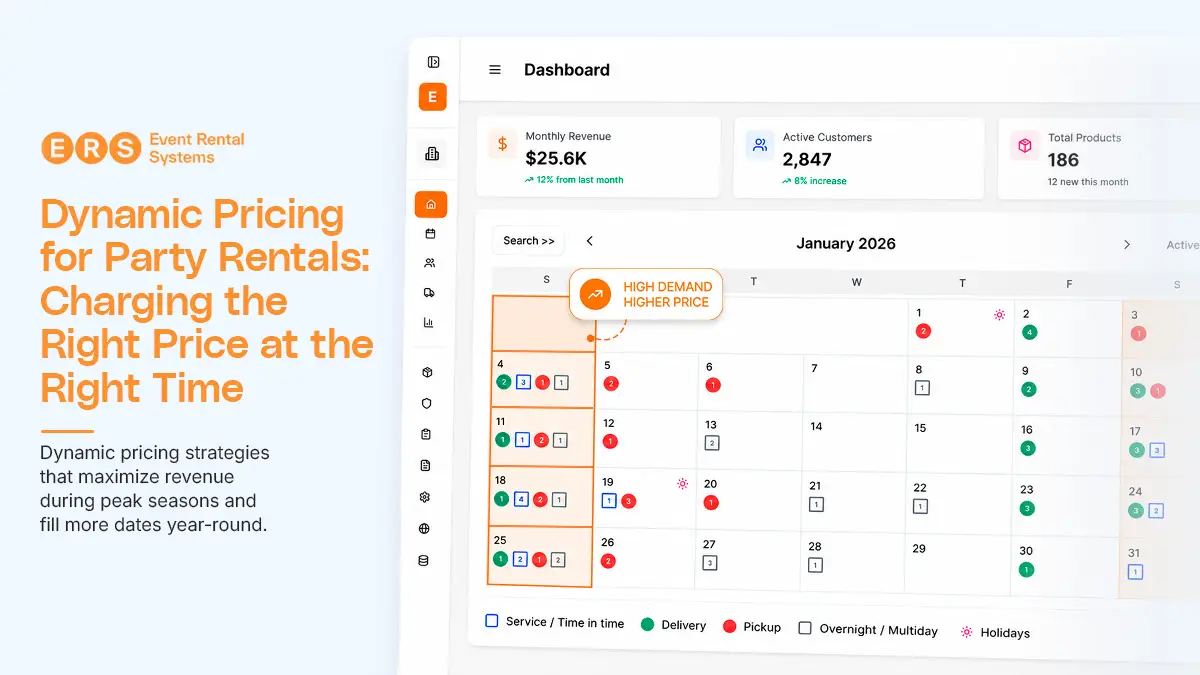
Event Rental Systems (ERS) software can apply pricing rules automatically based on date, season, or day of the week, so rates adjust without someone having to manually edit every listing. Once the rules are set, pricing stays consistent without relying on someone remembering to make the change.
Through automation tools for rental businesses, custom rules can be built around the specific patterns in your business, whether that’s a peak-season rate for the busiest months, a weekend premium, a discount for slower weekdays, and more, so the pricing structure you land on can run in the background instead of requiring manual updating.
ERS also gives you access to detailed reports, so you’re not setting these rules blind. Booking history, revenue by date, and demand patterns are all available to help guide your pricing decisions, rather than relying on guesswork.
Ready to Take the Guesswork Out of Pricing?
See how ERS can get you set up with dynamic pricing, optimized routing, and integrated payments for your rental business. Book a free demo to get started.
Frequently Asked Questions
What Is Is Dynamic Pricing?
Dynamic pricing is the strategy of adjusting your prices for the current demand. Adjusting your pricing in such a way lets rental businesses capture more revenue on high-demand days and book more rentals on slower ones. Many industries use dynamic pricing already including airlines, hotels, car rentals, and ride shares.
How Does Dynamic Pricing Improve My Margins?
If implemented correctly, dynamic pricing is one of the few ways to improve your margins without adding another delivery or increasing your logistics costs at the same rate.
When demand is high, you can charge more for a booking you were already likely to receive. The truck still makes the same trip, the crew handles the same setup, and the inventory follows the same delivery schedule. That means more of the additional revenue can flow directly to your bottom line.
During slower periods, lower pricing can also help turn your idle inventory into revenue.
How Do I Know How Much to Raise or Lower My Prices?
Start with reviewing last year’s booking data to see which dates filled up fastest and which had inventory that sat idle. That gives a data-based starting point for setting peak and off-peak rates, rather than guessing.
Can Software Make Dynamic Pricing Easier to Implement?
Yes. Manually updating prices for every product, across every season, weekend, and weekday, is tedious and easy to fall behind on.
Rental software like ERS allows you to set pricing rules that will adjust pricing based on date, season, or day of the week. This will ensure that the adjusted rates are displayed without someone having to manually edit every listing.
ERS also has detailed reporting features that can easily be used to guide those pricing decisions instead of relying on guesswork.