
A Customer Relationship Management system, or CRM, is a central database where you can store information about the people who have interacted with your event rental business, whether they are past customers, current customers, or new leads.
Instead of keeping customer details scattered across text messages, emails, spreadsheets, notebooks, and old invoices, a CRM keeps important information in one place. That can include contact details, event dates, order history, quotes, conversations, follow-up notes, and customer preferences.
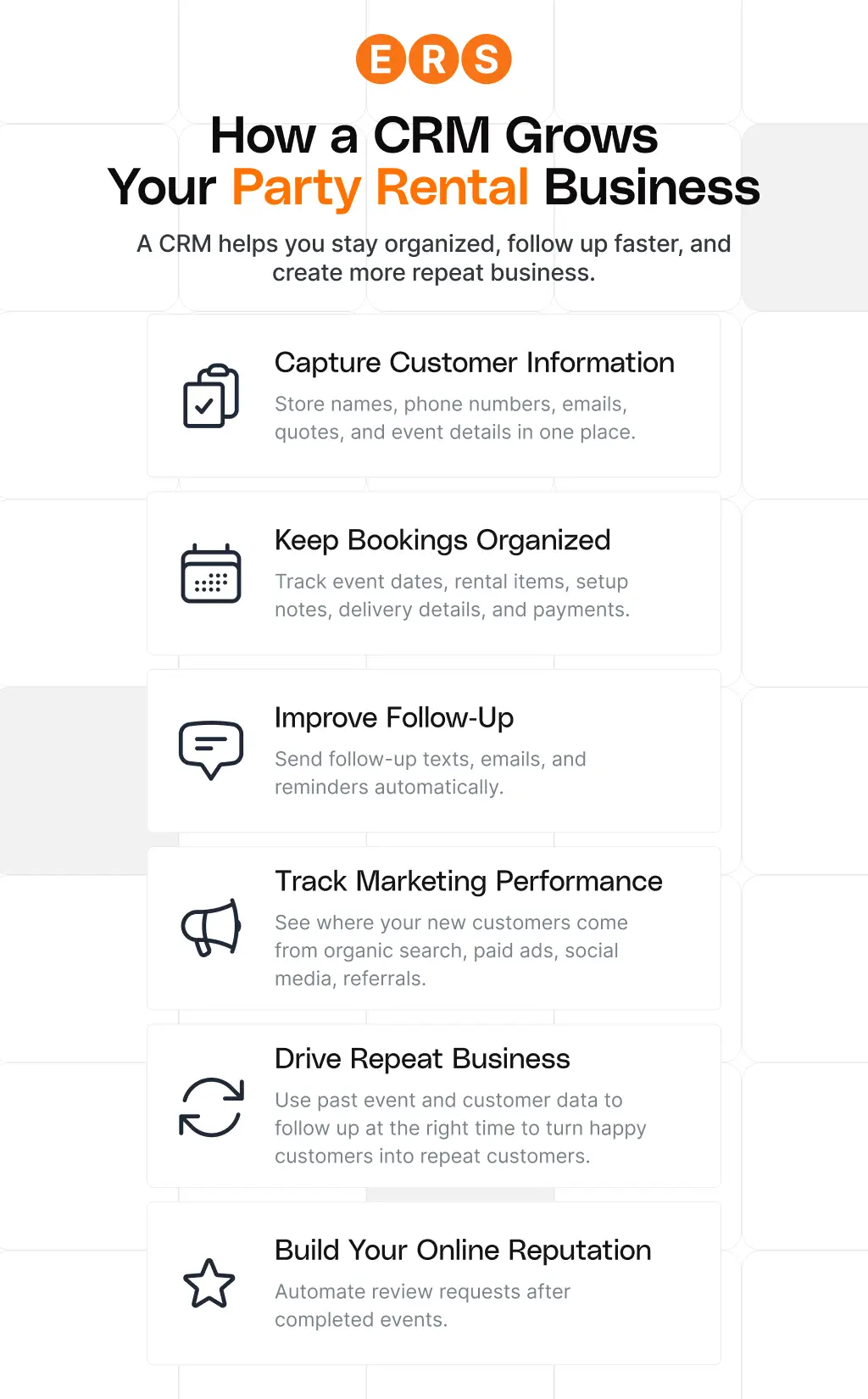
But a good CRM serves as way more than an online address book, as it will also help you take action with this information. You can send texts or emails, follow up with leads, review customer history, run reports, and keep track of where each person is in the booking process. For a rental business, that means fewer missed opportunities, faster follow-up, and a more organized way to turn inquiries into paid bookings.
In this guide, we’ll explain what a CRM is, why it’s a smart investment for a party rental business, and how the right software can help you organize your customer information, improve work flows, and grow your business.
TL;DR
- A CRM keeps customer details, event information, order history, and communication notes in one place instead of scattered across texts, emails, and spreadsheets
- For party rental businesses, a CRM helps streamline new bookings by keeping all customer and event details organized from initial booking to delivery day
- A good CRM also makes it easier to follow up with past customers and generate repeat business
- ERS CRM helps rental businesses track customer acquisition sources, run targeted follow-up campaigns, and automate review requests that strengthen online visibility and drive future bookings
Why Rental Businesses Lose Track of Customers
In the rental business sector, customers can contact you through several channels including:
- Website forms
- Phone calls
- Facebook messages
- Texts
- Emails
Even if you are a smaller business, it’s still going to be a challenge to keep track of all of these details by manual methods. And as your business grows, this is only going to become a heavier administrative lift to keep up with.
What Information Can Be Stored in a CRM?
A CRM organizes everything you know about your customers and their transaction history with you into one place. Here’s a breakdown of what kind of information is typically stored in a CRM and how you can use it to grow your business.
Basic Contact Information
At the most basic level, a CRM is designed to store your customer’s:
- Names
- Phone Numbers
- Email addresses
And having this just this basic information stored in your CRM can open simplify several business tasks including:
- Sending quotes
- Confirming bookings
- Planning deliveries
- Following up after the event with a review request
Event Details and Order History
Beyond the basic contact info, a CRM can also be used to store details specific to the event itself, including:
- Event date
- Event type (birthday party, school field day, church festival, corporate picnic, etc.)
- Location
- Products the customer is interested in
Each type of event may call for a different kind of follow-up, package, or recommendation, so having this readily available helps your team use a specific approach instead of a “one-size-fits-all” method.
Additionally, this information is key for getting repeat business in the future.
For example, birthday parties happen every year, so storing this information in your CRM allows you to follow up with past customers around the same time next year to see if they are hosting another party, what rentals they may need, and whether it makes sense to send a special offer or discount code. Because a CRM can also store a customer’s order history (what they booked, when they booked it, and how often) it becomes much easier to identify repeat customers, recurring annual events, and rebooking opportunities without digging through old invoices.
Notes from Calls, Emails, and Texts
Conversations with customers often include small but important details, like:
- Gate codes
- Setup instructions
- Preferred delivery times
- Special requests
You can also use a CRM to keep these notes attached to the customer’s profile, so your team can easily find them on event day instead of having to search through old messages.
Customer Acquisition Sources
A CRM can also be configured to track what marketing channels brought in the customers that booked with you. Common customer acquisition sources include:
- Google search
- Facebook or other social media
- Referrals
- Repeat booking
Tracking customer acquisition sources helps you see which marketing channels are actually bringing in booked business. That makes it easier to compare organic traffic against paid ads, measure results from Google Ads versus Facebook Ads, and make smarter decisions about where to spend your marketing budget.
How A CRM Helps You Stay Organized and Drive Repeat Business
CRMs can be used in virtually any B2B or B2C business, from wedding businesses to restaurants and retail shops. But for rental businesses, a CRM should be more than cloud storage for customer contact information. The right CRM helps you keep booking details organized, streamline communication, and create more opportunities for repeat business over time.
Streamline New Bookings
When a new booking comes in, there is a lot more to manage than just a name and phone number. You need the customer’s contact information, event date, delivery details, rental items, notes, and any instructions that matter for setup day.
A CRM gives you one place to keep all of that information together so your team is not having to search across texts, emails, paper notes, and spreadsheets trying to find the details they need on delivery day. This is especially useful during busy times for party rentals when more efficient booking processes drive less overhead and more profit.
Make Repeat Bookings Easier
A CRM also helps you get more value from the customers you already worked hard to book. When you have a record of past events, rental history, and customer details, it becomes much easier to follow up at the right time.
That matters because repeat business is a major part of a healthy rental company. For example, one party rental operator recently shared on the Booked Solid podcast that about 60% of his business comes from repeat customers and referrals. That is a strong reminder that growth is not only about finding new customers. It is also about staying connected to the ones you already invested time and money to acquire.
If too many of your customers are one-time bookings, it becomes much harder to build momentum. You are constantly replacing business instead of building on it. A CRM helps prevent that by making it easier to send follow-up messages, stay top of mind, request reviews, and turn past customers into future revenue.
Add-ons like concessions and yard games are a major driver of profit. With a CRM, you can see what add-ons customers have ordered in the past, allowing you to better cross-sell and upsell. Learn more about Party Rental Add-Ons in our in-depth blog.
How ERS Helps Rental Owners Manage Leads and Customers
A CRM is most valuable when it does more than store customer information. It should help you keep booking details organized, make communication easier, and give you a clearer view of every customer relationship from the first inquiry to the next repeat booking.
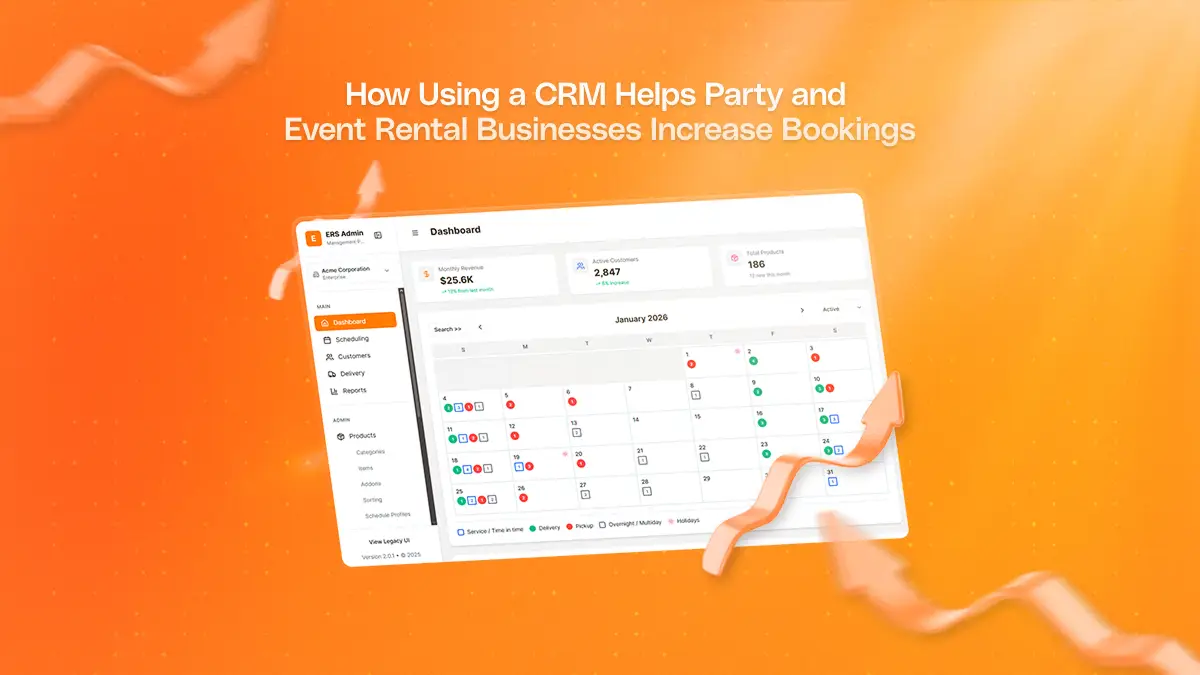
Event Rental Management Software from ERS gives rental owners one place to manage customer contact information, event details, order history, notes, and customer acquisition sources without having to piece everything together from texts, emails, spreadsheets, and old invoices. It also makes it easier to send follow-up messages, keep track of booking activity, and stay organized as your business grows.
ERS also gives you a better way to use your existing customer data for marketing campaigns. Because past rental information is already in the system, you can build lists based on event type, customer history, or seasonal opportunities and reach out to those specific groups. That makes it easier to contact schools, churches, or families with birthdays at the right time of year instead of sending the same message to everyone.
For rental businesses that want a more streamlined marketing strategy, ERSMail makes it easier to run targeted email campaigns, and HighLevel (add-on package) can add more advanced CRM and messaging capabilities. When your customer information is easy to access and easy to use, it becomes much easier to stay on top of new bookings, follow up at the right time, and create more repeat business over time.
ERS brings customer data, communication, and booking history together in one system built for the way rental businesses actually operate. If you want a better way to manage leads, customers, and repeat bookings, book a demo to see how ERS works.
Frequently Asked Questions
What is a CRM?
A CRM, or Customer Relationship Management system, is software that stores customer contact information, order history, communication notes, and other details in one place so businesses can stay organized, streamline marketing outreach, analyze reports, and drive growth.
Why Do Event Rental Businesses Need a CRM?
Event rental businesses are often contacted by customers through numerous channels including calls, texts, emails, and website forms. A CRM helps keep that information organized so teams can manage bookings, track communication, and reduce missed booking opportunities.
How Can a CRM Improve Marketing for an Event Rental Business?
A CRM can track new customer acquisition sources like organic search, paid ads, and social media, while also using previous customer data for targeted follow-up campaigns. It can also automate review requests after completed events, helping you build a stronger online presence that brings in more new customers. That matters because reviews are one of the most effective ways to build trust and win future bookings without increasing ad spend.
Can a CRM Help Generate Repeat Bookings?
Yes. A CRM can store past bookings, order history, and customer details so you can stay connected with previous customers and reach out when they are most likely to book again. For many rental businesses, that kind of follow-up matters because repeat customers can make up a significant portion of total bookings. For instance, one ERS user recently shared that about 60% of his business comes from repeat customers and referrals.